

Whale Lesson: Balloons Do Not Go to Heaven
Whale encounters have a way of making floating trash feel personal.
...but sea creatures do!
Summery: Balloons kill wildlife and are a waste of helium.
Aboard Sampatecho II we have counted hundreds of discarded mylar and latex balloons floating off the eastern seaboard. We've seen the carcass of a whale killed by ingesting them.
These things are a danger to endangered species. They should be banned!
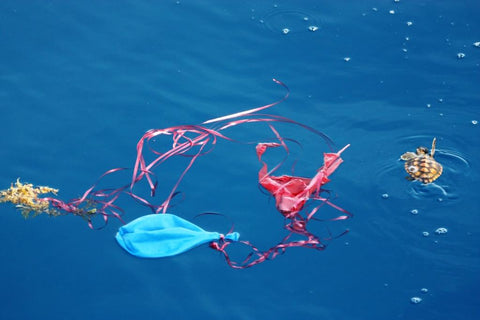
In one passage alone we counted over 30 groups of balloons.
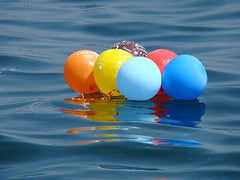
Additionally, helium is a finite resource, important in some medical procedures and we are frivolously wasting it on colourful bags of petroleum which kill whales and other endangered species.
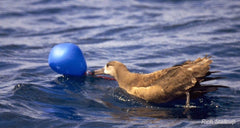
I'm sorry to get gruesome, but it is important that I impress my point. When I see a cluser of balloons on the beach or in the ocean it's like seeing flowers by the side of the highway (to denote an accident.)

The picture above is a Greenpeace representation after the sperm whale was found, it’s not real.
Click here to learn more about this whale made of plastic and find out more about balloons and plastic in the oceans.
Balloons Do Not Go to Heaven because wind and water eventually bring them back down. From a boat, the problem looks less abstract. You see ribbon, plastic, foam, and odd bits of celebration drifting where fish, birds, and turtles live. That is enough reason to skip a balloon release and choose something that does not leave the cleanup to the next tide.
Boaters notice this stuff because we are out where it lands. A loose balloon, a bit of line, or a plastic bag may look small from shore, but on the water it becomes part of the day. The better choice is simple: celebrate without sending trash downwind.
Out cruising, the small bits of plastic are often the ones that make you stop and think.